
Limewash, Venetian plaster and the difference that matters
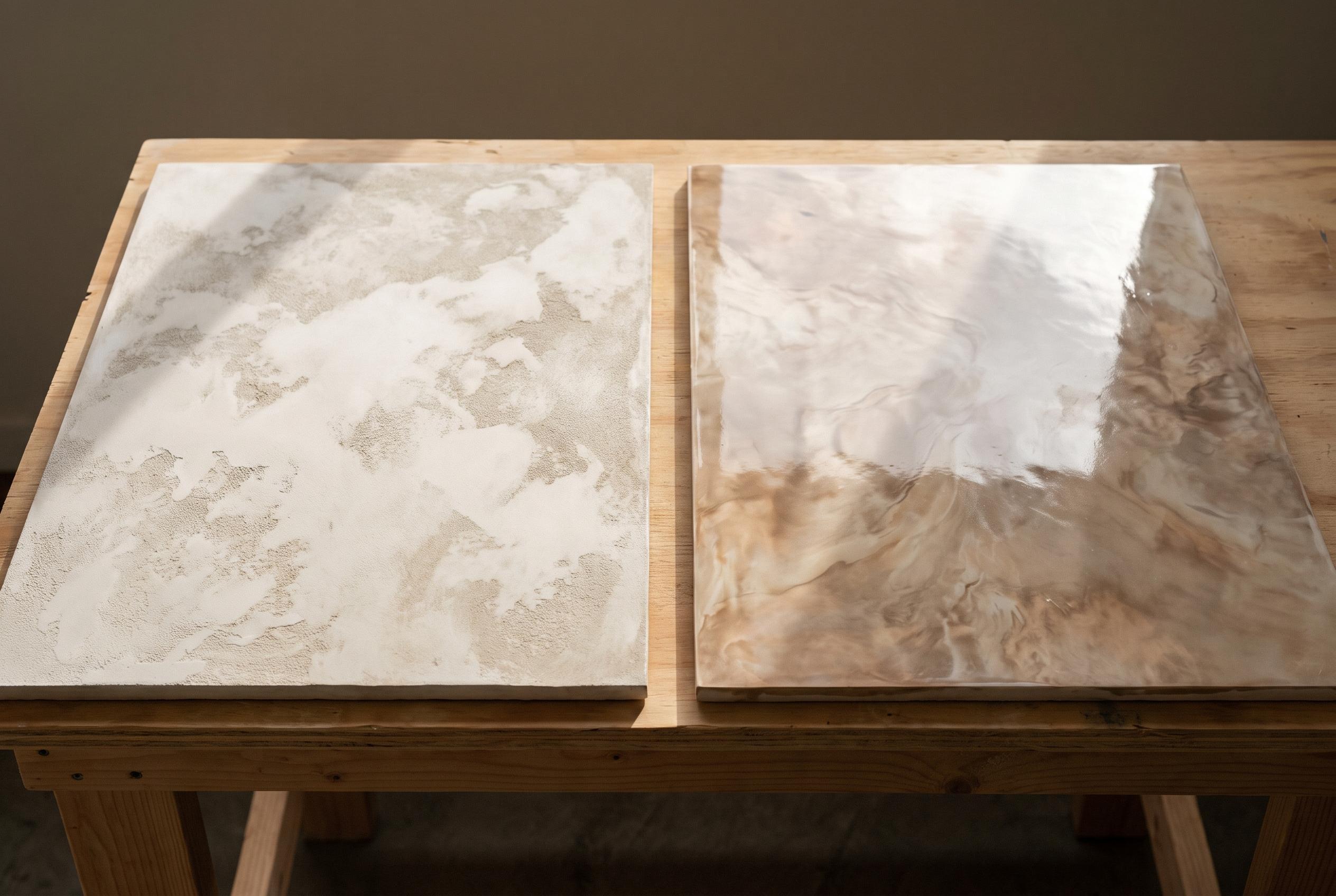
Clients often use the two names interchangeably, which leads to disappointment on site.
Limewash is thin, matte and mineral. It soaks into the substrate rather than sitting on it, and the finished wall has a soft cloudy movement. It is forgiving of imperfect plaster and unforgiving of patch repairs, which means each wall must be completed wet-edge in one session.
Venetian plaster is the opposite. It is built up in multiple thin coats and burnished with a steel trowel until the surface closes and takes on a polished, almost stone-like depth. It needs a genuinely flat substrate, and it rewards slow work: the sheen comes from the burnishing, not from the material.
Choose limewash for texture, atmosphere and a room that should feel calm. Choose Venetian plaster where you want reflectivity and drama, and where the lighting scheme has been designed to exploit it.
Neither is a shortcut. Both cost more in labour than in materials, which is the honest way to think about specifying them.
- decorative
- specification